‘Rule of Law’ established in UP by eradicating the ‘Rule of Mafia’: Chief Minister
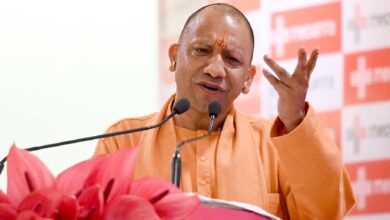
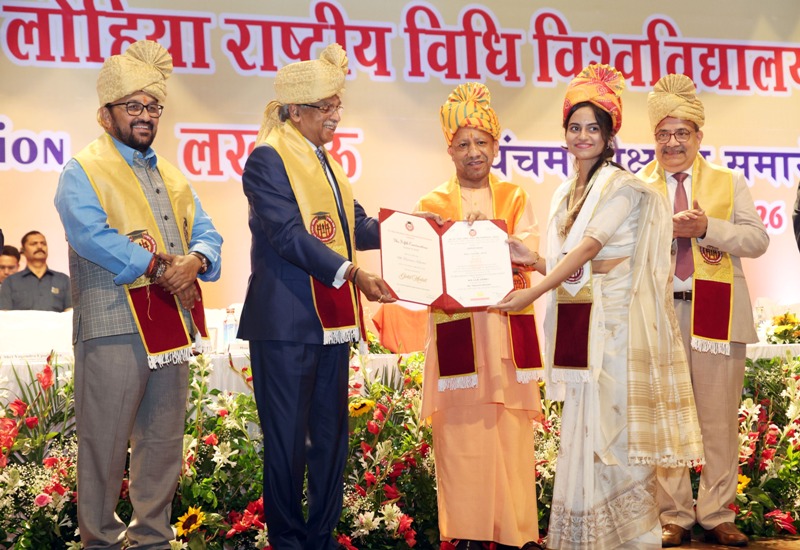
CM Yogi Adityanath addresses the fifth convocation ceremony of Dr. Ram Manohar Lohia National Law University
The greatest asset of law is not its sections, but the trust of the common people: CM Yogi
Make AI an assistant, not a charioteer; a machine can offer suggestions, but the final decision must be based on human judgment
Young legal professionals urged to remain committed to truth, Dharma, impartiality and constitutional values to advocate for Viksit Bharat
Chief Minister tells young legal professionals: History will deliver the verdict, but you have to make the arguments.
Lucknow, October 17, 2026
Chief Minister Yogi Adityanath said, “Uttar Pradesh was once under the influence of mafia rule, but the rule of law has now been established in the state. This is the strongest foundation for development, investment and public trust. At one time, UP was placed among the category of BIMARU states, and questions were raised about investment and law and order. However, through strong determination and an effective action plan, the state has transformed its position. Today, Uttar Pradesh is among the country’s top three economies and is progressing as a revenue-surplus state.”
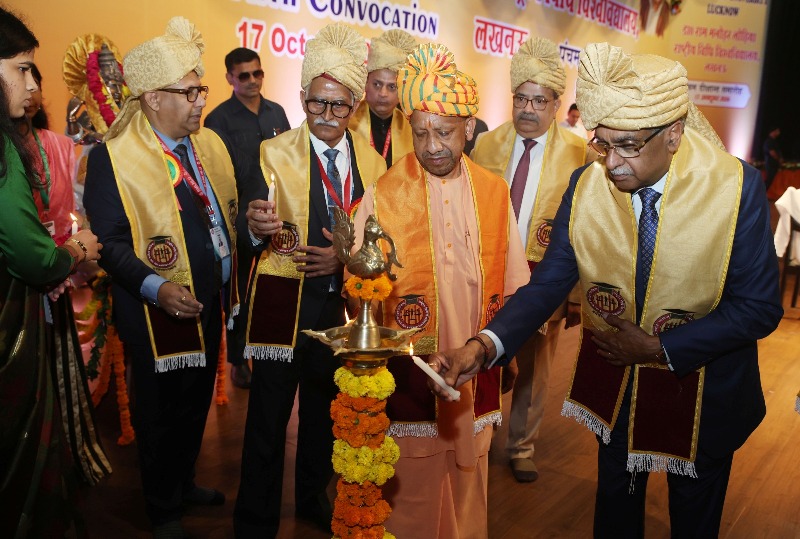
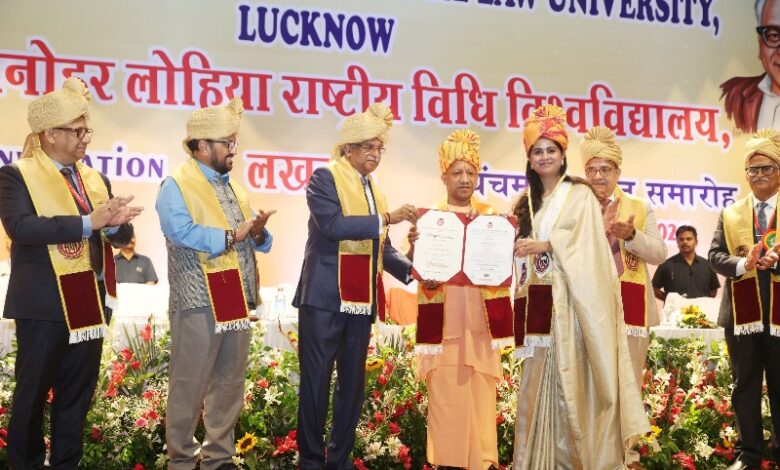
The Chief Minister was addressing the fifth convocation ceremony of Dr. Ram Manohar Lohia National Law University, Lucknow, on Saturday. He told young law graduates not to restrict law to sections and court cases alone, but to make public trust, the protection of rights and access to justice the foundation of their work. The vision of Viksit Bharat cannot be realized merely by building roads, factories and expressways. It requires strengthening a system based on justice, rights and duties.
He said, “Every person standing at the last rung of society must receive justice easily and accessibly, without discrimination. The greatest asset of law is not its sections, but the trust of the common people. This trust is strengthened through impartiality, respect for victims and the conduct of legal professionals. Legal professionals must remain committed to truth, Dharma, impartiality and the Constitution.”
The Chief Minister informed, “Before 2017, the perception of the state was that investment was unsafe, connectivity was weak, and development opportunities were limited. People believed that Uttar Pradesh could not improve. Changing this perception required determination and an action plan that could deliver results. Establishing the rule of law was an important part of this transformation. We freed the state from mafia rule and established the rule of law. Earlier, the situation was such that even convoys of people holding administrative and constitutional positions would stop in front of a mafia figure in Prayagraj. Today, however, under the rule of law, the state is setting new benchmarks in development.”
Presenting the convocation as a hypothetical court case, the Chief Minister said, “If ‘Viksit Bharat 2047’ were a case, 140 crore Indians would be the petitioners and young legal professionals would be their advocates. This case would require facts, evidence, arguments, and honest advocacy. The respondent would not be an individual or a political party, but the status quo-oriented mindset that refuses to accept that change is possible.”
CM Yogi stated, “India’s Independence, the implementation of the Constitution, the Emergency, landmark judicial decisions and reforms undertaken in the country could be regarded as important milestones in the nation’s journey. The country became independent on August 15, 1947, and the Constitution came into effect on January 26, 1950. The imposition of the Emergency on June 25, 1975, highlighted the distinction between the ‘rule of law’ and the ‘rule of the ruler’. After May 2014, the country’s reform process gained momentum. The country repealed more than 1,500 laws that had become irrelevant. Through the Jan Vishwas Act, 183 provisions across 42 laws were amended to decriminalise minor lapses.”
Referring to the Insolvency and Bankruptcy Code, GST, changes related to Article 370 and the Nari Shakti Vandan Adhiniyam, he said that reform does not merely mean enacting new laws, but also removing old laws whose relevance has ended.
The Chief Minister further informed, “In 2013, India was counted among the world’s 5 fragile economies, whereas today it is among the world’s top five economies. This transformation has strengthened global confidence in India. Similarly, Uttar Pradesh has set a target of becoming a one-trillion-dollar economy. A vision document has been released and an action plan implemented for this purpose.”
He expressed confidence that the state would achieve the target by 2029-30. He said strengthening the rule of law, impartiality, and public trust is essential to achieving the state’s economic progress and development goals. Respect for victims and making justice accessible are key foundations of this trust.
Speaking about the role of technology and artificial intelligence (AI), the Chief Minister said, “Technology has changed the nature of both crime and evidence. AI has made research, data analysis, and assessing possible outcomes easier, but it has also brought new challenges. Through deepfakes, a person’s face and voice can be presented in a way that makes viewers and listeners believe they are real. In such circumstances, the authenticity of digital evidence must be scientifically examined.”
He added that when a criminal sitting in another country steals a person’s lifetime savings in a single stroke, identifying and tracing that criminal becomes challenging. Under these circumstances, young legal professionals must understand both technology and law.
The Chief Minister stated, “Cyber police stations have been established in all 75 districts of Uttar Pradesh. The state has set up cyber help desks in 1,583 police stations across the state. The state has also established a forensic institute. Through the AI Pragya program, the state is training 10 lakh young people in AI, data analytics and cybersecurity. The new criminal laws recognize electronic evidence. Forensic investigations are mandatory in cases carrying a punishment of seven years or more.”
He said, “AI cannot replace the judgment of a judge or a legal professional. In the Shrimad Bhagavad Gita, after imparting knowledge to Arjuna, Shri Krishna leaves the decision to Arjuna’s own judgment. In today’s technological terminology, this principle can be described as ‘human in the loop’. A machine can offer suggestions, but the final decision must be made by a human being.”
He added that we should make AI an assistant, not a charioteer. Your judgment and Dharma should be your charioteer. A machine can prepare a draft, but an innocent person may pay the price of negligence with their freedom. Therefore, a machine may write code, but it is the legal professional who must adhere to the code of conduct.”
The Chief Minister said, “The true measure of Viksit Bharat is the change in the life of the person standing at the last rung of society. Mahatma Gandhi expressed this ideal through Gram Swaraj, while Pandit Deendayal Upadhyaya articulated it through Antyodaya. Development should not be assessed by the economic condition of the person at the highest rung, but by the condition of the person standing at the lowest rung. The couplet by Goswami Tulsidas, “Jasu raj priya praja dukhari, so nrip avasi narak adhikari,” makes it clear that the value of governance and administration lies in public welfare.”
The Chief Minister made four key appeals to young law graduates. First, they should not remain silent spectators in the face of injustice but actively help establish justice. Second, they should stay connected to their roots and villages and help resolve minor land and family disputes in rural areas. Third, they should safeguard their moral character and professional credibility and avoid any improper compromise or shortcut. Fourth, they should stay updated on new laws, judicial decisions, and amendments, and cultivate the habit of self-study. Speaking the truth, practicing Dharma, and never being negligent in self-study are among the most important values in any advocate’s life.
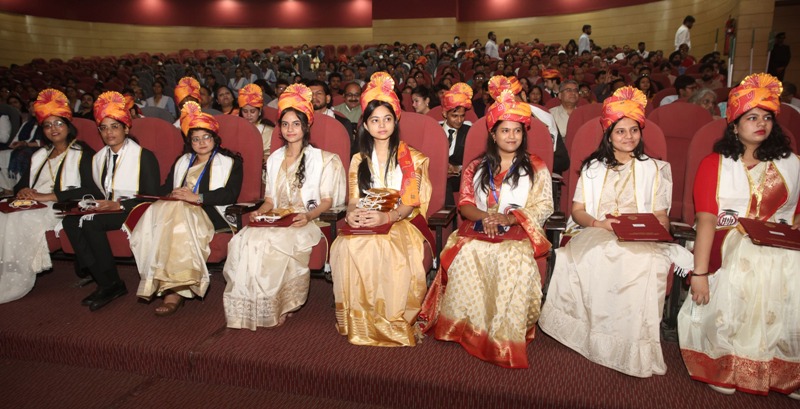
Congratulating the graduating students and their parents, the Chief Minister said, “A convocation ceremony marks the fulfillment of years of sacrifice, prayers and hard work by parents. Behind the students’ degrees lie countless sleepless nights their parents endured and the struggles they faced in difficult circumstances. Young graduates should not regard their degrees merely as certificates of academic qualification, but as symbols of the trust of 140 crore Indians.”
He said that whenever a case seems difficult, or the responsibility of a decision feels overwhelming, they should turn to the Constitution of India for guidance. History will deliver the verdict, but you have to make the arguments.
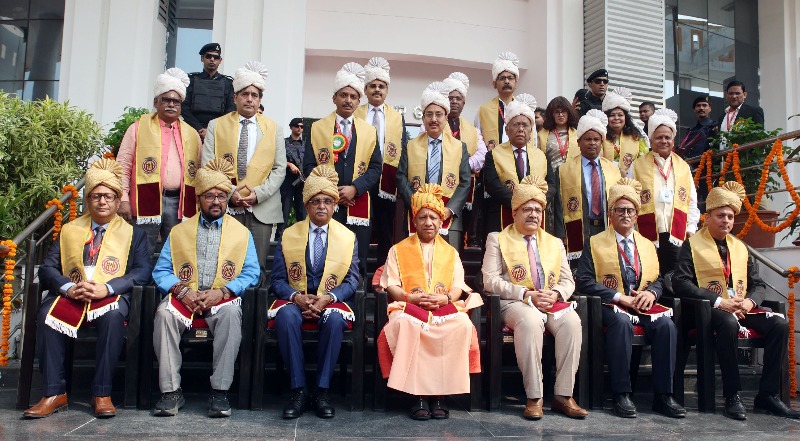
On this occasion, Supreme Court Justice Vikram Nath, Allahabad High Court Chief Justice Arun Bhansali, Higher Education Minister Yogendra Upadhyay, Dr. Ram Manohar Lohia National Law University’s Vice-Chancellor Professor Amar Pal Singh, Head of Department Professor Manish Singh, the university’s Registrar Keshav Kumar, and other distinguished guests were present.