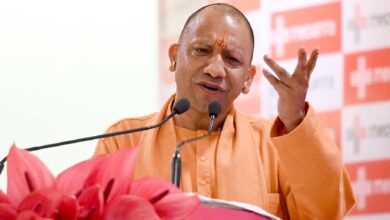
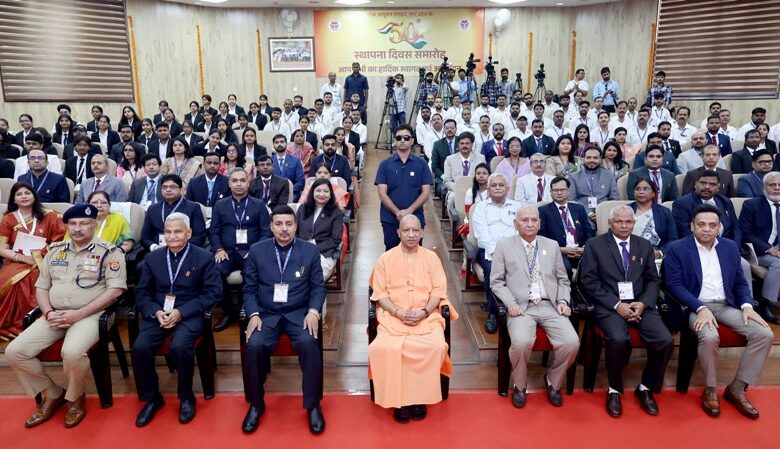
The Chief Minister attended the 50th Foundation Day celebrations of the Lokayukta Organization, Uttar Pradesh, as the chief guest
CM Yogi Adityanath Emphasises Public Trust, Transparency and Technology in Good Governance
Lucknow, September 14, 2026
Uttar Pradesh Chief Minister Yogi Adityanath said that the greatest strength of democracy lies in the trust that ordinary citizens place in constitutional institutions. He emphasised that good governance depends fundamentally on public trust and that democratic institutions cannot achieve their objectives unless people have confidence in them.
Addressing the 50th Foundation Day celebration of the Lokayukta Organisation, Uttar Pradesh, as the chief guest, the Chief Minister said that the true test of good governance is whether a person standing at the last rung of society feels confidence and pride in constitutional institutions and receives a timely, rule-based resolution to his concerns.
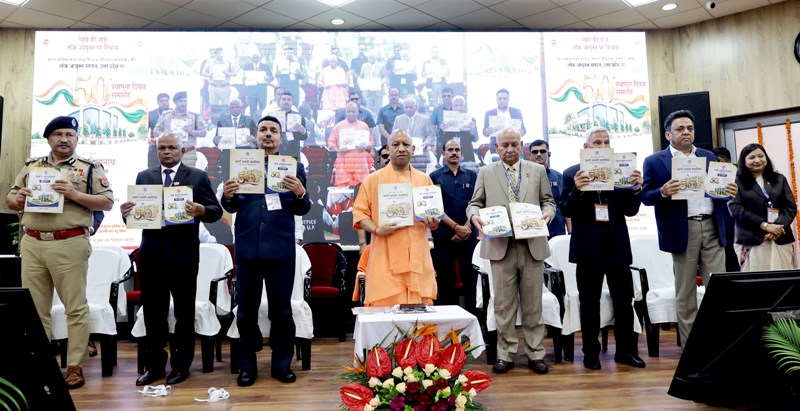
On the occasion, CM Yogi released the commemorative souvenir and information booklet of the Lokayukta administration.
Lokayukta as an Institutional Check
The Chief Minister said that institutions such as the Lokpal and Lokayukta were necessary in the past and remain equally relevant today. If an attempt is made at any level to protect a public servant accused of wrongdoing, a complaint before the Lokayukta can provide an opportunity for action based on merit.
Referring to the importance of institutional accountability, he quoted the well-known saying, “Prabhuta pai jahi mad nahi”, observing that power can sometimes lead individuals towards irresponsible behaviour. Therefore, effective institutional checks are necessary to ensure that those holding public office maintain dignity, ethical standards and accountability.
50 Years of Lokayukta Organisation
CM Yogi recalled that following the Emergency of 1975, steps were taken to establish institutions such as the Lokayukta. In Uttar Pradesh, the Lokayukta Organisation was established on September 14, 1977, under the leadership of Justice Vishambhar Dayal.
He described the completion of 50 years as an important and mature milestone and said that under the leadership of Lokayukta Justice Sanjay Mishra, the organisation is moving forward with renewed strength and relevance.
The Chief Minister directed that comprehensive documentation of the Lokayukta’s 50-year journey should be prepared, including details of cases received, cases disposed of and actions taken. He also called for a roadmap for the next 50 years rather than limiting the Golden Jubilee celebrations to a review of the past.
Call for National-Level Dialogue
CM Yogi suggested organising a major programme as part of the Golden Jubilee celebrations by inviting the Lokpal of India and Lokayuktas from across the country.
He said best practices followed by different states should be discussed and shared. Dialogue, he stressed, is essential for strengthening democracy, and senior members and former judges associated with the organisation should also be invited for meaningful interaction.
The Chief Minister said efforts should continue to make the functioning of the Lokayukta more transparent, clean, honest and ethical. He assured that the state government would continue to provide necessary and positive support to the organisation.
Justice, Truth and Equality as the Foundation
CM Yogi said the makers of the Indian Constitution recognised justice, truth and equality as fundamental requirements of the system. Every individual has the right to justice, while truth remains the foundation of justice.
He stressed that complaints should be resolved on their merit rather than on the basis of a person’s caste, faith or community.
He also highlighted the positive results emerging from the use of technology by the Lokayukta Organisation and said the government is using technology to reduce complaints and possibilities of corruption.
AI, Data Analytics and E-Governance
Looking ahead, the Chief Minister said technologies such as Artificial Intelligence, data analytics, cybersecurity and e-governance would play an important role in making administration more transparent, responsive, effective and accountable.
He said technology is truly useful only when it becomes a means of public welfare and helps achieve the objectives of good governance.
At the same time, he cautioned that grievance-redressal mechanisms should not be misused. Unnecessary and excessively broad complaints without specific grounds can consume government resources and also affect citizens who genuinely need justice. Therefore, complaints must have specificity and merit.
Technology Transforms PDS Grievance Redressal
The Chief Minister recalled that in 2017, complaints related to foodgrain distribution under the Public Distribution System were among the most common grievances.
According to him, nearly 60 out of every 100 people visiting the Janata Darshan at that time brought complaints related to the PDS.
The government subsequently connected around 80,000 fair-price shops with e-PoS machines and established monitoring mechanisms at the headquarters level. Trucks transporting ration from FCI warehouses to fair-price shops were tracked, while timely delivery was ensured.
As a result, CM Yogi said, complaints related to the PDS in Janata Darshan have now become almost negligible.
He added that around 16 crore people in Uttar Pradesh are currently receiving ration facilities without discrimination. Technology has helped eliminate possibilities of under-weighing, manipulation and discrimination while ensuring a single-delivery system.
34 Lakh Pending Revenue Cases Resolved
The Chief Minister said that in 2017, around 34 lakh cases related to land disputes, measurement, inheritance and mutation were pending in the Revenue Department. More than six lakh cases alone were related to inheritance.
The government introduced fixed timelines for various processes and established mechanisms for time-bound disposal of pending cases. In land-use matters, a deemed mechanism was introduced where decisions were not taken within the prescribed period, helping establish accountability of the concerned officials.
CM Yogi said that over the past nine years, 34 lakh pending revenue cases have been resolved, while around nine lakh new cases have also been received and are being examined on merit.
To reduce the possibility of human error in land measurement, modern robotic technology is being introduced in every tehsil. The technology is expected to enable measurement with accuracy down to the inch. Traditional jarib measurements will increasingly be replaced by coordinate-based technological measurement, reducing the possibility of even minor discrepancies in land boundaries.
DBT Strengthens Public Trust
The Chief Minister also highlighted the role of Jan Dhan accounts and Direct Benefit Transfer (DBT) under Prime Minister Narendra Modi’s leadership in strengthening trust between the government and citizens.
He said that earlier there was a perception that out of every ₹100 sent by the government, only ₹15 reached the intended beneficiaries. Today, the DBT system enables the entire sanctioned amount to be transferred directly into beneficiaries’ bank accounts.
At present, around 1.10 crore people in Uttar Pradesh receive an annual pension of ₹12,000, with the amount transferred directly to their bank accounts every fourth month. There is no intermediary involved in the process.
Lokayukta Justice Sanjay Mishra on 50 Years of Service
Addressing the programme, Uttar Pradesh Lokayukta Justice Sanjay Mishra said the organisation’s 50-year journey represents a journey of credibility, impartiality, public trust and ethical responsibility in public life.
He said corruption is not merely an economic offence but a social issue that affects the rights and interests of farmers, youth and the poor.
He emphasised the need to further strengthen transparency and accountability through digital governance, data analytics and artificial intelligence.
Deputy Lokayuktas Highlight Future Priorities
Deputy Lokayukta Surendra Kumar Yadav said the Lokayukta Organisation was established on September 14, 1977, with the objective of ensuring integrity, transparency and accountability. He stressed that the purpose of the vigilance mechanism is not to intimidate honest public servants but to reach the truth impartially.
He said that over the next 25 years, systems should be developed so that citizens do not have to struggle unnecessarily to obtain their legitimate rights.
Deputy Lokayukta Dinesh Kumar Singh said that under the guidance of the Chief Minister and with the cooperation of the state government, important initiatives have been undertaken to make the Lokayukta Organisation more capable, stronger and technologically modern.
Deputy Lokayukta Shambhu Singh Yadav said impartiality, dedication to duty and detachment from personal gain form the foundation of a corruption-free work culture. He stated that between 2017 and 2025, the organisation maintained an average case disposal rate of around 90 percent, while the disposal rate reached 98 percent in 2024.
A short film documenting the 50-year journey of the Uttar Pradesh Lokayukta Organisation was also screened during the programme.
Senior officials present on the occasion included Additional Chief Secretary to the Chief Minister, Home and Information Sanjay Prasad; Director General of Police Rajeev Krishna; and Lokayukta Secretary Dr. Reema Bansal, along with other dignitaries.